The Best AI Strategy Starts With Your People
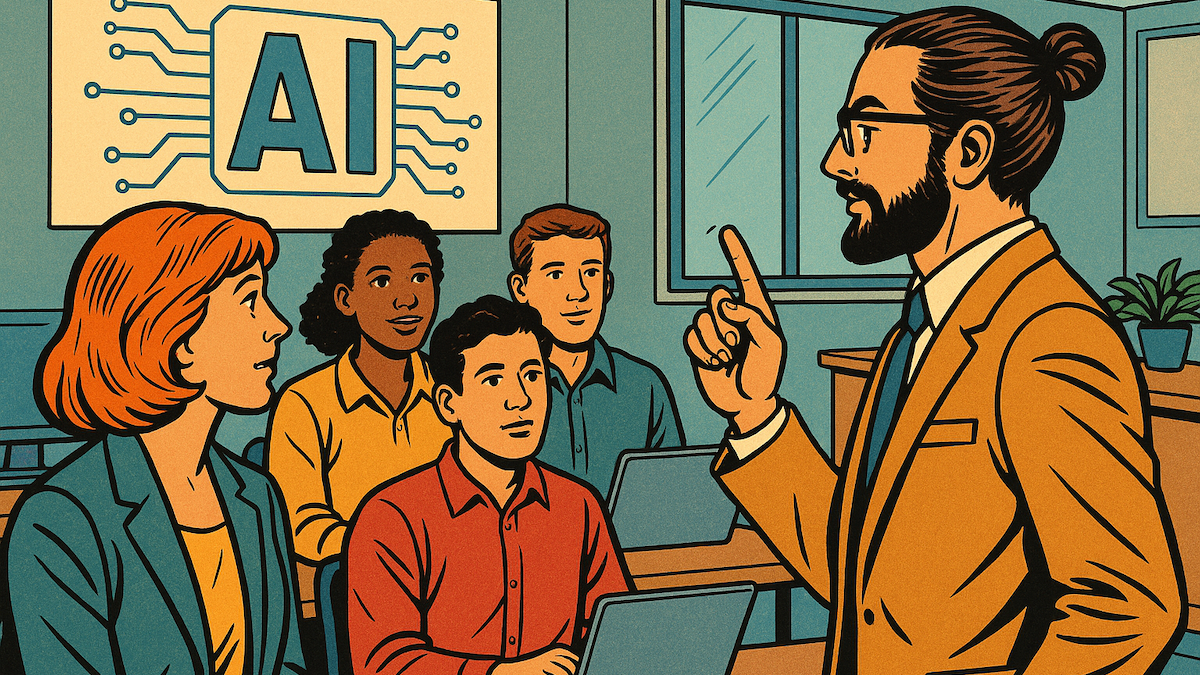
We’ve talked about artificial intelligence (AI) strategy and the role luck sometimes plays along the way. So I thought it would be worth wrapping things up on a high note—and giving you something concrete to bring it all together. It’s something so obvious that most organizations overlook it, even when they’re investing heavily in AI. What is it, you ask? Training. That’s right, training your team might be the most important skill you’ve overlooked in your AI journey.
One of the biggest challenges with many AI systems today is that they seem ready to go from the moment we sign up—mostly because the first tasks we assign them are fairly simple. That gives us a false sense of mastery that fades quickly when we try to apply AI to more complex—or frankly, impossible—problems.
Your Team Is the Model That Matters
What I’ve seen in organizations, both large and small, is that the main challenge isn’t the technology itself but the lack of training on the AI tools people already have access to. This leads everyone to use AI differently, even within the same department. The result is inconsistency, misalignment, and, in many cases, lost productivity. Clearly, that wasn’t the plan. AI wasn’t meant to give us higher costs and lower results.
So how do we fix this? The answer is surprisingly simple (though not easy): we need to slow down and learn systematically how to use AI tools consistently across the company. I know what you’re thinking: “I’m a free spirit, I can’t be controlled, let me express myself through my AI use!” I get it—and maybe you’ll be able to do that once you (and your colleagues) master the fundamentals that will allow your business to thrive in the AI era.
The Advantage Is in the Fundamentals
Here are three key actions you can start implementing today to align your teams, improve productivity, and elevate AI adoption to a world-class level:
First, host a masterclass on the AI tools available within your company, with hands-on training on how to use them and the main pitfalls teams might encounter. If your organization has departments with more than 20 people, those teams should receive additional training.
Second, build an internal knowledge base powered by AI where any team member can go to solve problems, find best practices, and tackle complex tasks. This also lets leadership see in real time how AI is being used across the company, what challenges are emerging, and where there’s room for improvement.
Third, depending on the pace of change in your industry—which you’ll know from your AI strategy—new masterclasses and training sessions should take place quarterly or, at most, every six months. No longer than that. Wait too long, and your team will end up working with outdated tools, outdated methods, and no clear understanding of where AI or the business is headed.
Of course, there are other steps you could take, but these three will set you on the right path—with clarity and direction. Remember that even the most extraordinary athletes and the most talented artists in the world had to master the fundamentals before they could bring their creative visions to life on the field or on the canvas. I encourage you to do the same.
Originally published in Spanish for Fast Company Mexico:
https://fastcompany.mx/2025/10/24/estrategia-ia-equipo-gente/